
$27.09
$33.86
50% OFF! Hot items selling fast—Grab them before they're gone!
 Unconditional Satisfaction GuaranteeNo Shipping Fees Above 302 Months to Decide. Returns Simplified.
WhyCalathea MedallionPlants?
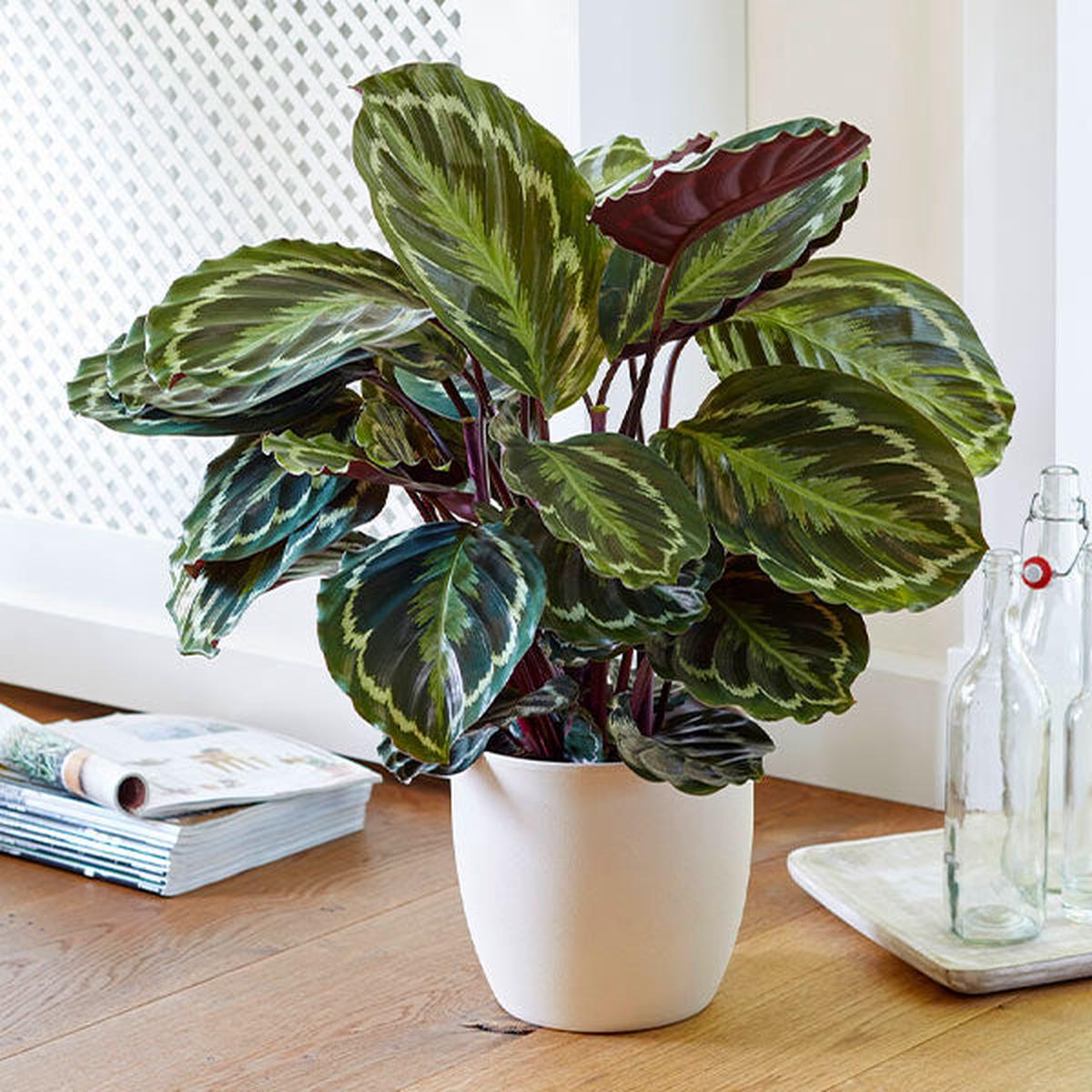
Decorate your spacewith lush, tropical lookswith this rare house plant! A native of South America, the Calathea Medallion is delivers impressive impact, and will thrive in the right conditions.
The Calathea Medallion puts on a striking display, withlarge, variegated leavesand a light green and white halo pattern. Red stems and a rich purple-burgundy hue on the underside of its leaves add even more contrast.
The Calathea Medallion getsthenickname Prayer Plant due to its unique leaf behavior. The leaves of the Prayer Plant move to follow the light, opening and fanning out during the day and folding up at night, likea pair of hands in prayer.
An added bonus?The Calathea Medallion is non-toxic, making it an excellent choice for homes withpets and kids.This fast-growing house plant willgrow best inindirect light with moist soil, and its compact size makes it ideal for small spaces.
Why FastGrowingTrees.com is Better
The best part about our Calathea Medallion?It’s set up to thrive in your homescape. Its a proven performer because weve grown and nurtured it with care, from start to finish.Your Calathea Medallionswill beready to grow, as soon as it arrives at your door.
Now, you reap the rewards of our hard work with a high-quality, personalized experience that you wont get from other nurseries or big box stores. Healthy roots, happy plants, and hassle-free good looks await get your Calathea Medallion Prayer Plant today!
1. Planting: Calatheas do well with indirect bright light. Place your plant in front of a bright window but be sure to keep it away from drafty areas.When you’re repotting or planting your plant, select a container that’s twice the width of the shipped container and one that has drainage holes. Use a well-draining container potting mix then place your plant and water to settle the roots. If your potting mix needs more drainage we recommend mixing in perlite to help.
2. Watering: Calatheas can be quiteparticularwhen it comes to watering, so try to be consistent and only water when around 75% of the soil is dry. You can test this by putting your finger in the soil to check its level of moisture. Too little or too much water will result in brown and yellowing leaves. In addition to watering, keep the environment humid (over 40% is ideal) by using a cool misting humidifier or mist the plant a couple times a week.
FGT Tip: If your leaves are still yellowing and browning and you have ruled out too little or too much water try using filtered water next time you water your plants.
3. Fertilizing: The main growing season of your calathea plant is during the months of March-October. You will want to fertilize during these months with a balanced houseplant fertilizer. Follow product instructions for more specifics.
4. Pruning: Little pruning is needed but occasionally you will need to prune any dead or damaged leaves off. Simply trim the leaf at the base with a sharp pair of pruners.